Tuesday, July 7, 2009

Can a Bad Marriage Hurt Your Health? Maybe, If You’re a Woman


marriage-health
Getty Images
By Theresa Tamkins

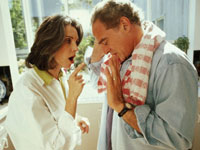
THURSDAY, March 5, 2009 (Health.com) — When a marriage is rocky, it can make both partners feel depressed. But only middle-aged women—not men—seem to have health problems associated with marital strife, such as high blood pressure, excess belly fat, and other factors that boost risks for heart attack and diabetes, according to a study being presented Thursday at the American Psychosomatic Society meeting in Chicago.

“I think we’ve got to get used to the fact that a toxic relationship is toxic to your whole health,” says cardiologist Nieca Goldberg, MD, medical director of New York University’s Women’s Heart Program.

In the study, University of Utah researchers looked at 276 couples to see if depression was the real reason poor marriages have been found to be harmful to health. The couples were middle-aged or older Utah residents who were mostly married for a long time—on average more than 27 years; they ranged in age from 32 to 76.

The researchers found that bad relationships were bad for health—for women at least. Women in troubled relationships were more likely than other women to be depressed. Plus, they were more likely to have metabolic syndrome, a cluster of risk factors including elevated blood pressure, high triglycerides, low levels of HDL (good) cholesterol, abdominal obesity, and elevated blood sugar—all basically steps on the road to heart attack or diabetes.

“For husbands, we didn’t see, on its own, that negative marital stuff was related at all to metabolic syndrome. The only thing it was related to was their depressive symptoms,” says Nancy Henry, a doctoral candidate in clinical psychology at the University of Utah. “For men, having a problematic marriage is still emotionally, but not physically, problematic healthwise.”

Although the researchers didn’t specifically ask the subjects about religion, many Utah residents are Mormons, who may be less likely than people in other religious groups to get divorced, says Henry. “Because we have this really traditional value of marriages here in this state, in this area, then I think we have surveyed couples that are staying together no matter what,” she says.

Next page: Why getting a divorce won’t solve the problem


Sunday, July 5, 2009

ALL ABOUT HERPES!

Ladies,

I found this article. Once again -- I'm posting something that can relate to oral sex and your health. If there's one thing that scares the crud out of me... it's the thought of getting herpes. I want to warn women out there to be aware of how easily it can be spread. Remember.... If he has a cold sore on his mouth -- even the smallest sign of one.... he should be nowhere near your "area". You can get genital herpes that way. Stay free and clear. -Health Girl

HERPES

On this page we will delve into the topic of two types of herpes: herpes simplex 1 and herpes simplex 2 and various aspects of living with and learning about both.

For anyone living with genital herpes – the most common attempt at disclosure will be to compare the infection to that of oral herpes or “cold sores.” There always seems to be an underlying need to somehow “lesson” the severe perceptions that one may have by drawing attention to the herpes virus that is socially acceptable. Contrary to scientific fact, many believe there will always be a “good” herpes virus (oral herpes) and a “bad” herpes virus (genital herpes).

100% Organic Treatment Proven Effective for Herpes virus:

Use H-Balm to Treat Herpes virus

Based on the various up to date information resources and the assistance of Dr. H of Herpes.org, we will explore the two types of herpes based on varying criteria.

According to The American Social Health Association, under a microscope herpes simplex 1 and herpes simplex 2 are virtually identical, sharing approximately 50% of their DNA. Both herpes type 1 and herpes type 2 infect the mucosal surfaces of the body – most often the mouth or the genitals and then establish latency in the nervous system. For both herpes simplex 1 and 2, it is estimated that two thirds of those infected have no noticeable symptoms or no symptoms at all. Studies have shown that both herpes 1 and herpes 2 can be spread when there are no symptoms present.

The primary difference between herpes 1 and herpes 2 is their “site of preference” when establishing latency in the body. Herpes simplex 1 usually establishes latency in the trigeminal ganglion, a collection of nerve cells found near the ears. Recurring herpes outbreaks will generally occur around the mouth or facial region. Herpes simplex 2 usually establishes latency in the sacral ganglion, a collection of nerves found at the lower base of the spine. HSV-2 recurring outbreaks will generally occur in the genital region.

Though this is the most commonly noted difference, it is not absolute. Herpes simplex 1 and herpes simplex 2 can reside in either or both parts of the body and infect orally and/or genitally. Unfortunately, many are unaware of this and this lack of knowledge contributes to the ongoing spread and to the growing number of herpes type 1 genital cases being responsible for genital herpes.

With many years of believing that herpes type 1 is only related to oral herpes, many people are not aware that herpes type 1 can and is being contracted both orally and genitally and can cause genital herpes. So many people are under the presumption that there is that “Good versus Bad” herpes virus and with these beliefs social stigmas are thriving. While the “Good Virus” is believed to be “just a cold sore” – society has that euphemism to hide behind and don’t have to acknowledge that cold sores are indeed Herpes.

Common myths give indication that herpes simplex 1 causes a mild infection that is at times bothersome, but never dangerous. The reality is that herpes type 1 is usually very mild when affecting the lips, face or genitals. Herpes type 1 has been known to occur spontantiously in the eye “ocular herpes”. Ocular herpes can be very serious and could potentially lead to blindness. In some very rare cases, herpes has spread to the brain causing herpes encephalitis, an extremely dangerous infection that can result in death. These are however, Very rare! Herpes can be spread to the finger “herpetic whitlow”. Herpes is also quite common among wrestler’s “herpes gladiatorium” (a herpes infection of the chest or face).

Though society believes herpes type 1 to be the “Good Virus”, researchers are finding herpes type 1 to be more “risky” than previously perceived. Some medical professionals are finding herpes type 1 to be a more “significant” infection than herpes type 2 and the prevalence of herpes type 1 is severely underestimated.

Herpes type 2 is believed to be a painful and dangerous infection that affects people with an “overly active sex life”. This couldn’t be more false. Genital Herpes can infect anyone who has sex, even if only once. An estimated 25% of adults from varying backgrounds, income levels and ethnic groups have Herpes type 2 causing genital herpes. Herpes type 2 1s often so mild that an estimated two thirds of those infected don’t even realize they have it. Herpes type 2 rarely causes complications and more rarely spreads to other parts of the body.

Herpes type 2 is the most common cause of neonatal herpes, a rare but often dangerous and potentially fatal condition that affects newborns. Herpes type 1 is the primary cause of one third of neonatal infections. You can find comfort in knowing that both are completely avoidable with proper education, instruction and testing.

Because herpes type 1 and herpes type 2 have a “site of preference” both can behave very differently depending on the infected person. Herpes simplex 1 and herpes simplex 2 are quite common and neither poses a serious health threat. Due to their common existence in society, many health care providers dismiss them easily; even considering the long-term emotional effects a positive diagnosis of the herpes virus will have on their patient.

Herpes Simplex Virus (HSV) – though not life threatening, it is stealing the quality of life of many of those who are infected. At the same time, many of us who carry the herpes virus, regardless of location, realize its common place in society and know it’s nothing more than a “cold sore.”

Herpes Outbreaks? And how often?

The physical problem that herpes poses is primarily based on the individual and three varying factors. Those being; the strength of their immune system, how long they have had the herpes virus, and is the herpes virus affecting the “normal site of preference?”

Obviously a challenged immune system will have a strengthening affect on many “viruses” and is the main reason people are bothered by more frequent outbreaks and the primary reason herpes types 1 and herpes type 2 are a greater threat to infants who have limited immune response. This also causes the herpes viruses to greatly affect those with compromised immune systems due to other illnesses such as cancer, HIV, severe burns, etc.

How long a person has the herpes virus also plays a large role in frequency of outbreaks. It is not clear why a decrease of herpes outbreaks occurs over time, but is believed to be due to the build up of antibodies in the infected persons system.

It is estimated that 100 million American’s who are infected with herpes simplex 1 contracted the virus as a young child. Due to the substantial time of living with the herpes virus, by the time they reach adulthood only about 5% will find it to be a medical problem and seek treatment.

The estimated 40 million American’s infected with herpes simplex 2 almost always acquired the virus as a teen or as a sexually active adult by having unprotected sexual contact with someone who has genital herpes. Those infected with genital herpes will, on average, experience 4-6 outbreaks that first year, with a decrease in outbreaks occurring over time.

Due to Herpes type 1 and herpes type 2 having their sites of preference and though HSV can account for both genital herpes and oral herpes cases, regardless of type, both are known to be milder when they are “outside their site of preference.” You could easily say the type located in its “site of preference” has the home court advantage.

An example of this is most people infected with herpes simplex 1 genitally have reported fewer genital herpes outbreaks if any in a single year. It is estimated that herpes simplex 1 now accounts for as many as 30% of all genital herpes cases in the U.S and 2-5% of the recurring outbreaks are associated with the herpes type 1 virus.

Herpes type 2 oral infections are Very rare and in those few known cases, recurring outbreaks are extremely rare.

Spreading the herpes virus?

One of the most common “haunt’s” of those infected with genital herpes is the concern of transmitting the herpes virus to a non-infected partner. At the same time, those infected with oral herpes often show little concern if any at all of possible transmission of the herpes virus.

In reality one type is just as easily transmitted to their site of preference, and can be spread to other locations as well. Both herpes type 1 and herpes type 2 are most contagious during active outbreaks; however the herpes virus can be transmitted during times of viral shedding, when no symptoms of an outbreak are present. Herpes type 1 is shed through the saliva approximately 5% of the time when the person is symptom less.

Typically in the first year of infection with herpes type 2 from genital herpes, one will shed about 6-10% of those days when there are no symptoms. This of course will decrease over time as well.

There are always questions of transmittability as it pertains to those who already have one type of herpes. It has been found that oftentimes, having one type of herpes will offer a resistance to the other type. This is due in large to the body having built up antibodies against the already existing type. This immune response will offer some resistance. When a person with one type of herpes does acquire the other type, it will generally result in a much milder first episode.

Herpes simplex 1 is the most easily acquired form of herpes and is typically spread through a social kiss such as that of a family member. Due to the lack of immune response in children, new herpes type 1 infections typically occur in childhood.

By the time that child reaches adulthood, they will be one of 50% of American’s living with herpes type 1. By the time a person reaches the age of 50, they will be one of 80-90% of those who carry herpes type 1.

Nearly all herpes simplex 2 infections are encountered after childhood when they began having sex. Those who have a prior infection of herpes simplex 1 have an acquired immune response that lowers – but will not eliminated the risk of acquiring herpes simplex 2. According to some studies, a previous infection of herpes simplex 1 reduces the acquisition of subsequent herpes simplex 2 by as much as 40%.

A prior infection with herpes simplex 1 orally greatly lowers the risk of contracting herpes type 1 genitally. Studies have shown that the majority of herpes type 1 genital cases causing genital herpes are occurring in those with no prior history of HSV of either type.

In the absence of prior oral infection, herpes type 1 spreads easily to the genital area, usually through the practice of oral sex. In some countries, genital herpes caused by herpes type 1 account for as many as half of their entire genital herpes cases.

The question of immunity to herpes always lurks in the backs of minds. Some studies have suggested that the ganglia may acquire immunity to HSV after they have been exposed to one viral type of herpes. Studies have also shown that a herpes infection of the ganglia with more than one type is difficult, indicating that it may be more difficult to acquire a second HSV where one already exists. Example: A prior infection of herpes type 1 genitally will offer resistance to a genital herpes infection of herpes type 2.

Some researchers have stated that a prior infection of herpes type 2 genitally will protect against infection of herpes type 1.

Another common question is – If you have genital herpes from herpes type 2 will your partner contract it orally through oral sex? The answer is most probably not! Almost 100% of all recognizable cases of herpes type 2 are genital.

If you have herpes type 1 in the genitals can you give this to your partner through genital sex? The answer is Yes! Though the risk is reduced due to the infection not being located in its “site of preference” which means there is far less shedding and much fewer outbreaks.

So now the question is, “If herpes is so easily spread from oral to genital, then why are people not taking stronger more precautionary measures?” This is due largely because of the social stigma’s that are associated with “The bad herpes virus”. It is all a matter of public education and social acceptance. So many time’s there will be no convincing that person who has a history of cold sores that those have nothing to do with a “cold” but are in fact herpes, because “they went away!” The nearest thing to a cold linked to oral herpes is the fact that a challenged immune system will on occasion lead to an outbreak. Typically during times of colds or flu’s and the symptoms associated with the primary infection of herpes that includes flu like symptoms.

Health Care Provider’s, Researcher’s and other informed people can offer as much data and information on the differences between herpes simplex 1 and herpes simplex 2, but reality is that as long as society chooses to remain the judge and jury with their opinions and remain locked in the belief that genital herpes is “the bad herpes”, there is little that can be done to begin to erase the social stigmas or alter the mindset of those who choose not to become more educated.

Regardless of all efforts being made, the common belief that “oral sex is safe sex” will also continue. So long as this practice continues without proper precautions and testing, American’s could see the numbers of genital herpes continue to incline. In fact, Dr. H of herpes.org has stated that within the next 5 – 10 years we could see the number of genital herpes cases rise from the current 1 in 4 to as many as 1 in 3 or even 2.

Because an infection that is associated with the genitals and through the act of sex, regardless of how sex is portrayed on television, viewed by society or practiced by as many as 98% of adults, there will always be something “taboo” about any virus that is associated with sex, period.

We can only hope that one day, through the continued efforts of concerned organizations, the walls of social stigma and a judgmental society will begin to fall. Today living with the herpes virus and realizing that you are indeed a part of a majority rather than a minority can offer you the first step to emotional freedom.

Regardless of location, herpes is herpes is herpes. It is only a “cold sore” and is a virus that is treatable, controllable and in many cases avoidable even with a partner who carries the herpes virus. By taking the time to become educated, learning your body, your triggers, your symptoms, etc. you can take control over your life and the herpes virus.

It is all a matter of how proactive and educated you choose to be.

*This information has been provided with special thanks to Dr. H of Herpes.org, The American Social Health Association, Global Health Services, Centers For Disease Control and input from many who live with the Herpes virus.
Thursday, June 25, 2009

Found this article. Please read and stay safe and aware ladies. - Health Girl

What Farrah Fawcett

Can Teach Us

About Anal Cancer

by Deborah Kotz


April 06, 2009 04:50 PM ET | Deborah Kotz | Permanent Link | Print

As much as I think celebrities should be afforded their privacy—like the rest of us—when they're battling life-threatening diseases, I sometimes blog about their conditions because I see them as teaching moments. Farrah Fawcett is in the news today with reports that she's been hospitalized for complications of anal cancer. She was first diagnosed with anal cancer in 2006. Speculation was running wild that she was "close to dying," but the latest reports say she's suffering from a blood clot that resulted from an "alternative" cancer treatment she had in Germany to fight the cancer's recurrence.

Anal cancer is one of those cancers no one likes to talk about because it's, well, anal cancer. But we really should discuss it as much as, say, cervical cancer. Both are predominately caused by the sexually transmitted human papillomavirus. In fact, a 2004 study of 6,000 anal cancer patients (the majority of whom were women) found that 73 percent of the patients tested positive for the strain HPV-16, one of the strains that the Gardasil vaccine protects against.

What's worrisome is that unlike cervical cancer, which has dropped dramatically since the advent of the Pap smear, anal cancer is on the rise. Incidence rates over the past 30 years have jumped by 78 percent in women and 160 percent in men, probably because more people now have more sexual partners and more people have anal sex (both among heterosexuals and gay men), says Lisa Johnson, a cancer epidemiologist at the Fred Hutchinson Cancer Research Center in Seattle who led the 2004 study.

Having unprotected sex, either anal or vaginally, raises your risk of becoming infected with HPV. Smoking is also associated with a higher risk of anal cancer, according to information I gleaned from the National Cancer Institute website, possibly because it inhibits immune function.

[Here are 12 other reasons to quit smoking.]

While anal cancer is far less common than breast cancer—1 in 640 women will be diagnosed during their lifetime, compared with 1 in 8 with breast cancer—only about half of anal cancers are detected in their earliest stage, when they're most treatable. Partly for this reason, only about 67 percent of people diagnosed with anal cancer survive five or more years.

There are, though, several ways women can protect themselves, says Johnson. Younger women can get the Gardasil vaccine, which is approved for those up to age 27. By blocking the transmission of two common cancer-causing HPV strains, she says, the vaccine presumably protects against anal cancers, throat cancers, and oral cancers that are associated with HPV infections.

[Here are other things to consider with regards to Gardasil vaccination.]

And don't skip those yearly gynecologist visits. As tough as it may seem, be upfront with your doctor if you've ever had unprotected anal sex and find out if there's any extra screening you should have. Anal Pap smears are available, and though they're mostly used for gay men, women can have them too. Be sure you have an HPV test along with your regular Pap smear. If you test positive for a cancer-causing strain and have had anal sex, talk to your doctor about methods for detecting anal abnormalities before they turn cancerous.

[Read about a new HPV test that's coming soon.]

I hope Farrah Fawcett will recover fully from this latest complication. I'm eager to see the documentary she's working on about her treatment experience. The fact that she has documented and shared her fight with cancer suggests that she, too, recognizes the importance of the teaching moment.

Due to the recent loss of Farrah Fawcett -- I wanted to show you all this article I found by Deborah Kotz on anal cancer. It was written before Farrah Fawcett's death, however it is a big wake up call. Ladies, this tags onto my previous post about HPV and throat cancer. Please be aware of the devastation that can be cause by what we are not aware of. Stay Safe.

-Health Girl


Tuesday, June 16, 2009

Swimsuit Shape-Up: Four Easy Moves


From Healthgirl: Found this article in Ladies Home Journal. Enjoy!


Swimsuit Shape-Up: Four Easy Moves
These classic exercises will get your body swimsuit-ready in no time.

Haven't been hitting the gym lately? There's still time to get in shape! Simply do these four classic -- and always effective -- exercises three times a week. They'll shape up your toughest-to-tone body parts in no time. (Combine with three weekly 45-minute cardio sessions for even quicker results.)

Walking lunge (for legs and butt). Begin by taking a giant step forward with your right foot. Lower your body until your right thigh is parallel with the floor. Push off with your left foot, and take a giant step forward with that left leg. Lower until left thigh is parallel to the floor. Repeat sequence as many times as you can, "walking" down a hall, across your living room, or in your back yard.

Squat (for butt). Stand with feet hip-distance apart, abs pulled in. Slowly bend your legs and lower your butt as if you were sitting in a chair. Your knees should remain directly over your feet as you do this. Go down as far as you can, with the ultimate goal of getting your thighs parallel to the ground. Hold for three counts, then return to standing. Repeat as many times as you can.

Push-up (for chest, arms, and back). Get on hands and knees on the floor. Keeping your knees on the ground, walk your hands forward until your body forms a straight line from your head to your knees. Be sure your hands are directly below your shoulders. Slowly lower your chest toward the floor, then return to starting. Repeat as many times as you can.

Mini-crunch (for abs). Lie on your back, hands behind your head, elbows out to sides. Bend your knees and plant your feet flat on the ground. Using your abdominal muscles, lift your shoulders one inch (only one inch!) off the ground. Hold for two counts, and then lower. Repeat as many times as you can.


Gene Test May ID Younger Women at Risk for Melanoma


With Summer here, I found this article on Medicine.net.com that I think is interesting. Please make sure to wear sunblock or sunscreen when you go out into the sun.


Gene Test May ID Younger Women at Risk for Melanoma

WEDNESDAY, March 25 (HealthDay News) -- A genetic variation that's associated with a nearly fourfold increased risk of melanoma in women under the age of 50 has been identified by researchers at the New York University School of Medicine.

Identification of this variation in a gene called MDM2 could lead to a screening test to identify women at high risk for the deadly skin cancer.

If confirmed in further studies, the increased risk caused by the MDM2 variation "is higher than a lot of the other clinical factors that we know, such as blistering sunburns, freckling, and family history," study author Dr. David Polsky, an associate professor of dermatology and director of the Pigmented Lesion Section of the dermatology department at NYU School of Medicine, said in a university news release.

"Potentially, we have a genetic test that might identify premenopausal women who are at higher risk for melanoma. And if that's not the case, then we might want to have increased surveillance of those patients including more frequent visits to the doctor, more rigorous teaching of skin self-examination, and other preventive steps," he said.

In their study of 227 melanoma patients, Polsky and colleagues found that more than 40% of female patients younger than 50 had the MDM2 genetic variation, compared with about 16% of female patients older than 50. The difference in frequency of the genetic variation corresponded to a 3.89-fold increased risk of melanoma among women younger than 50, the researchers said.

The study was published online March 24 and was expected to be in the April 1 print issue of the journal Clinical Cancer Research.

-- Robert Preidt

SOURCE: New York University Langone Medical Center, news release, March 24, 2009

Copyright © 2009 ScoutNews, LLC. All rights reserved


Wednesday, June 10, 2009

How to Stick to Your Diet on Vacation


How to Stick to Your Diet on Vacation (and What to Do When You’re Stuck)

shaun-chavis

I’ll be doing a lot of traveling over the next two weeks, and leaving home is an issue for any dieter. If you’re devoted to sticking to your meal plan, there are plenty of ways to keep track of calories on the road. Books like The Diet Detective’s Calorie Bargain Bible guide you to good choices at popular chains, not to mention websites like CalorieKing and DWLZ, or iPhone apps like Nutrition Menu and the LIVESTRONG Calorie Tracker. Even amusement parks like Disney World are no longer as dangerous as you might think; there are healthier choices at park eateries, like the smoked turkey leg that I love to split with a friend.

But there’s another dieting and travel problem that many people don’t want to talk about: vacation constipation! Sitting on planes and in cars for long periods of time isn’t good for your gut. You’ll feel bloated, and you’re not likely to fit into or feel great in your shorts or swimsuit. If you’ve been eating a healthy diet of fiber, fruit, and veggies and take a break to indulge in mile-high stacks of pancakes, bagels, pizza, and mounds of fries, you might find yourself stopping in a convenience store for Metamucil.

“A lot of people think they can go on vacation and have lasagna, or steak frites, or d

ive into fast food, and just add a salad and think they’ve got their fiber for the day, but that’s not enough,” says Danielle Svetcov, the author of The Un-Constipated Gourmet: Secrets to a Moveable Feast With 125 Recipes for the Regularity Challenged ($16; available in July).

I know. A cookbook about constipation sounds crazy, but Health’s senior food editor, Frances Largeman-Roth, wrote a prologue to Danielle’s book, so I flipped through it. As I read recipes for bourbon truffles, Gorgonzola-stuffed dried fig salad, chorizo and chickpea stew, and fruit compotes with yogurt, I forgot all about crazy. I was thinking yum.

travel-diet

(ISTOCKPHOTO)

Instead of laxatives, Danielle is a big believer in smart eating to keep your digestive system healthy. In fact, she always travels with a bar of dark chocolate (more on that below) for relief—and we’re not talking Ex-Lax. “I tell people they don’t have to give up the things they want to eat, but they have to decide what they want to splurge on and figure out where to balance it. Maybe you swap the fries for wild rice or Swiss chard.”

It turns out that waist-friendly strategies are also, well, waste-friendly. Here are a few cures for traveler’s tummy from Danielle’s book.

  • Avoid loading up on foods that are low in fiber and can get your gut stuck, like refined white bread, pastas, and pastries. Choose whole-grain and whole-wheat options whenever possible.
  • Spend 10 minutes on your back and bring your legs to your chest one at a time, as if you’re cycling.
  • Go for an hour-long walk at a fast pace, then lie down for an hour.
  • Have 3 ounces of dark chocolate (choose a bar that has at least 65% cacao), and chase it with a hot cup of black coffee or an 8-ounce glass of warm water. You need to sit still for at least one hour afterward for this remedy to work. (If you’re on vacation, now’s a good time to skip the museum tour.)
  • Pour yourself a shot or two of brandy in a warm glass. Slowly eat five prunes (unsulfured is best) and in between bites, sip the warm brandy. Again, you’ll need to sit still for an hour afterward.


.

Thursday, May 28, 2009

Wellness Retreats For Women; Girlfriend Getaways


Girlfriend Getaways

Wellness and Beauty

Retreats for Women

Improve Your Inner and Outer Self on Your Next Vacation

By Terry Ward

Girlfriend getaways wellness retreats

Plan a wellness retreat for your next girlfriend getaway.

Curious women travelers find myriad reasons for hitting the road.

Perhaps it's to dabble in learning a foreign language,or to partake in a cooking class in Thailand. Maybe it's to volunteer in an orphanage, or to experience the great American road trip with a good friend.

Whatever your pleasure, treating yourself to the trip of a lif

etime is sure to feel like the ultimate indulgence. And the pleasure is all the more palpable when self-improvement in the form of a wellness or beauty retreat is on the itinerary.

Wellness retreats as a travel niche are a growing trend for women looking to incorporate guaranteed downtime into their vacat

ions. After all, the last thing we need is to return from a vacation feeling exhausted from all the enforced sightseeing and "fun."

From adventure-oriented forays in America's great West to more overtly spiritual sagas in settings as distant as In

dia, there's no shortage of travel opportunities where focusing on improving your mind, body and soul are the only mandatory activities -- and it's up to you to dictate the order of importance.

Wellness retreats are rarely easy on the wallet, but remind yourself that no matter where you travel and what you

do, seeing the planet and improving your inner and outer self along the way is nothing short of a worthwhile, worldly investment.

Spiritual Journeys in Sedona and the Grand Canyon
Girlfriend Getaways in Sedona.The focus of this seven-day trip with Gutsy Women Travel is to get a new lease on your spirit and recharge your soul while taking in some of the American

West's most iconic sights. The tour starts in Las Vegas, but rest assured, you'll depart from Sin City in a flash to head to more mellow locales. The itinerary visits the Grand Canyon, Sedona and Red Rocks, and, along the way, you'll interact with a life coach, learn local lore from an American Indian guide and partake in a fireside chat with an author schooled in how to calm your mind while expanding your consciousness. A yoga session on the rocks of Sedona and a tour of the mystical vortices -- said to be the power points of Earth's energy -- are also on the agenda, as are introductions to Reiki, meals featuring edible flowers and an American India

n saging ceremony to cleanse your spirit. The price -- $2,299 per person -- does not include your return flight to Las Vegas, but does cover all lodging, meals, activities and transfers.

Yoga and Eco Wellness Tours in Costa Rica
Central America's most well-touristed country, Costa Rica boasts vast jungles and volcanic topography fringed by rugged oceanfront that make it a magnet for all sorts of visitors -- from surfers and hikers, to bird-watchers and budget European backpacker

s. But despite the tourist crowds, there's no lack of quiet, soul-stirring places in this beautiful nation situated between the Atlantic and Pacific Oceans, making Costa Rica a major destination for wellness tours. Lux World Travel, a tour agent based in Rochester, NY, offers women-only wellness retreats that m

ix yoga classes and meditation with eco-minded discovery outings. Seven-night packages include lodging in your own casita at an enviro-friendly boutique hotel, daily yoga classes, evening meditation sessions and eco-adventures, with your choice of surfing, jungle tours or horseback riding on the itinerary. All-organic meals are included in the package price, which starts at $1,295 per person (airfare to San Jose and gratuities not included). For additional fees, you can enhance the wellness aspect of your trip with many d

ifferent therapies, which may include energy-balancing with Tibetan singing bowls, volcanic clay detoxification therapy or consultations with a nutritionist about how to make positive diet changes and incorporate herbal remedies into your personal health plan.

Beauty and Wellness Retreats in Asheville, NC
Girlfriend Getaways Blue Ridge Mountains

Asheville is the East Coast's answer to places like Boulder, CO, or Half Moon Bay, CA -- a sublimely scenic mountain town in the Blue Ridge range that is a magnet for artists, writers, yoga gurus, crystal healers and general lovers of Mother Nature. And if you're looking for a great way to spend some female bonding time with your best girls while incorporating pampering in the equation, Appalachian Spa Ventures has just what the beauty doctor ordered. The Asheville Girls Relaxation Getaway gets you two nights lodging in a bed and breakfast or a luxury mountain cabin with a strict multiday beauty regimen that includes aromatherapy massa

ges, lavender facials, reflexology foot treatments and body wraps that ensconce you in lavender and rose essences. Packages also include dinner at an Asheville restaurant and can be tailored for two people or a crowd (from $925 for two people).

For something more on the Eastern medicine side of the wellness equation, consider a healing and wellness retreat at the Chi Welln

ess Clinic in Asheville, which aims to cultivate and enhance your body's innate healing instincts for improved health, happiness and overall spiritual harmony. The program includes visits to local organic farms (where you'll participate in organic farming activities and even pick some vegetables for dinner), Chinese tea ceremonies, cooking classes and a program of stretching, breathing techniques and meditation meant to heal conditions such as fatigue and weight issues from the inside out. You'll stay at a historic farmhous

e and mountaintop lodge on the grounds of a 4.5-acre organic farm that specializes in Chinese herbs.

Can't you just feel the good health vibes and inner glow already?

Pictures: Courtesy Gutsy Women Travel | iStock